
A Crackdown on India's Bus Safety Crisis
Fires, blocked exits and high-impact collisions — what keeps going wrong with India's intercity buses, and how to push compliance.
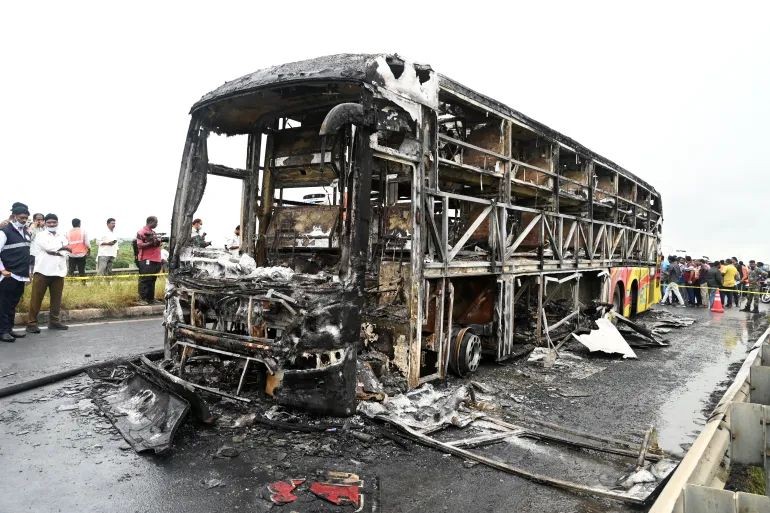
India's intercity bus network moves millions every night — yet too often the difference between a routine trip and a mass-casualty event comes down to basics that should have been guaranteed: compliant exits, safe wiring, working extinguishers, rested drivers, and real fitness checks.
Recent bus accidents in India
- Jaipur: Two passengers lost their lives after an 11,000 KV high-tension line snapped and fell onto the bus, igniting it.
- Jaisalmer: A private bus caught fire — reportedly an AC short-circuit. The blaze spread rapidly; 20 lives were lost.
- Kurnool: A sleeper bus turned into a fireball after ramming a fallen motorcycle, killing several.
- Telangana: A gravel-loaded truck rammed an RTC bus near Chavella — 19 lives lost.
What keeps going wrong
- Fire & evacuation risk in sleeper / AC coachesElectrical short circuits, flammable interiors, and blocked or jammed exits — Jaisalmer 2025 and Buldhana 2023 both saw passengers trapped inside locked compartments.
- Non-compliant body building & unsafe modificationsAIS-052 Rev.1 (2015) prescribes emergency-door size, placement, fire-retardant interiors and tested wiring. Operators ignore it during post-registration retro-fits.
- Risky operating practicesOverloading, disabled speed governors, fatigued drivers and faked fitness certificates magnify the harm of even well-built buses.
The standards exist — compliance must catch up
The menace of "custom-built" buses
Many operators buy a chassis from a manufacturer and build the body at unregistered workshops. These home-built or modified buses skip crashworthiness and fire-safety testing, use cheap flammable interiors, ignore electrical load standards and lack certified structural integrity. Only company-built, certified buses should be allowed on Indian roads.
Avoiding safety for profit: the silent killer
- Buses are overbooked with passengers or cargo.
- Fitness tests are faked or avoided through bribes.
- Speed governors are disabled to meet unrealistic schedules.
- Seat belts, fire extinguishers and emergency hammers go missing.
- Untrained or intoxicated drivers run long routes.
What you can do as a passenger
Spot a hazard? Call 1033 (NHAI 24×7) on national highways, use state RTO portals or VAHAN to report, and record photos/videos where safe — bus number, operator, route, time, location.
Don't normalise negligence
India's journey to safer roads can't begin until we stop accepting unsafe public transport. Report. Demand compliance. Choose certified operators.
- Check for emergency exits and hammers before boarding
- Choose seats near exits in sleeper / AC coaches
- Report hazards on 1033 (NHAI) or via VAHAN
Share this story
What keeps going wrong with India's intercity buses, and how citizens can push compliance.