
Stars Behind the Steering Wheel: Decoding Bharat NCAP
India's first car safety rating system explained — what the stars mean, what they don't, and why real safety needs more than ratings.
From Assumptions to Measured Safety
In 2023 alone, India lost over 1.72 lakh lives on the road — an average of 20 deaths every hour. Yet for most buyers, "safety" still means airbags and a sleek silhouette. Until recently, there was no reliable way to know how a car would actually perform in a crash.
That changed in October 2023, when the Government of India launched Bharat NCAP — the country's first official star-rating system for car safety.
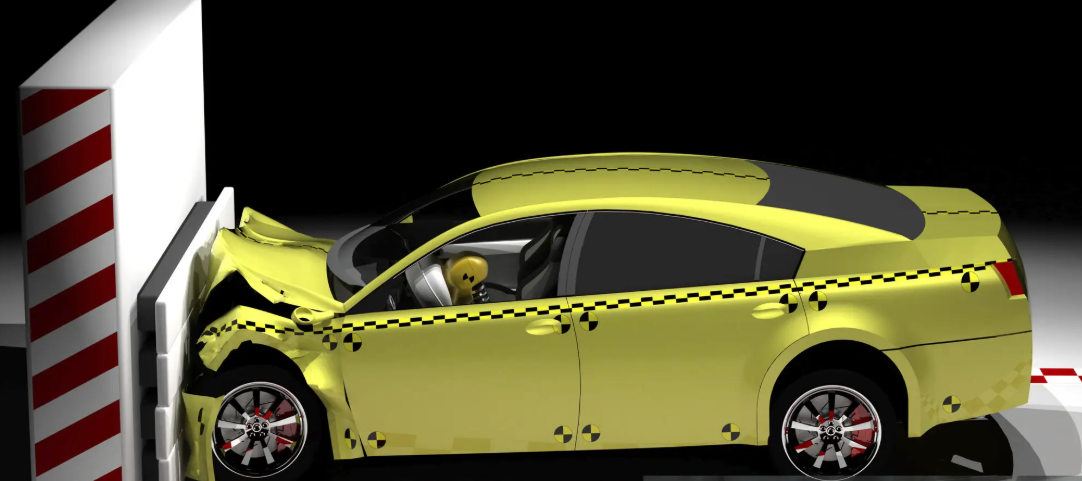
Crash Tests: Engineering the Odds of Survival
Just as planes are tested for turbulence, cars are tested for crashes. Engineers stage collisions to answer one question: when metal crumples, does life inside survive?
- Structural integrityDoes the cabin stay intact or collapse?
- Dummy injuriesSensors on head, chest and legs capture impact forces.
- Safety systemsDo airbags deploy? Do seatbelts hold? Are child seats effective?
The outcome is distilled into a 0–5 star rating — a simple scorecard that tells families how much protection to expect.
Bharat NCAP: India Finally Gets Its Scorecard
For years, Indian buyers leaned on brochures and word-of-mouth. Bharat NCAP gives everyone the same yardstick — applied to passenger vehicles under 3.5 tons with up to 8 seats, governed by MoRTH under CMVR Rule 126E.
Cars are scored across three categories:
- Adult Occupant Protection (AOP) — driver and adult passengers.
- Child Occupant Protection (COP) — children in car seats.
- Safety Assist Systems (SAS) — features that prevent or reduce harm.

A Missing Perspective: Who Makes the Crash Test Dummy?
Under AIS-197, frontal crash tests use two Hybrid-III 50th-percentile male dummies (~78 kg, 175 cm) plus standard child dummies. But women's anatomy — bone density, posture, injury patterns — differs significantly.
Age matters too. Older adults have more fragile bones and slower reflexes — a seatbelt that restrains a 30-year-old can fracture the ribs of a 70-year-old. Until Bharat NCAP adopts diverse dummies, the ratings risk missing half the picture.
Stars Shine at 64 km/h — But What About 100?
Bharat NCAP's frontal test runs at 64 km/h. That's the global benchmark. India's highways often push 90, 100, sometimes more — and survival odds fall steeply beyond the test envelope, no matter the rating.
Global vs Bharat NCAP: Where India Stands
- Governing body — Bharat NCAP: MoRTH. Global NCAP: independent NGO.
- Legal status — Bharat NCAP is mandatory under CMVR Rule 126E. Global NCAP is advisory.
- Coverage — Both test AOP and COP; Global NCAP also includes pedestrian safety, which Bharat NCAP still doesn't.
The Road Ahead
India has come a long way — from minimum regulatory approval tests to a consumer-facing star rating. The progress is undeniable. But the journey is far from over. Limited dummy diversity, a 64 km/h ceiling, and missing pedestrian safety remain real gaps.
Buy safety, not just stars
A 5-star badge signals minimum compliance, not a guarantee. Pair a well-rated car with safer driving habits and louder demand for safer roads.
- Check your car's rating on bncap.in before you buy
- Insist on ABS, ESC and side airbags as non-negotiables
- Push for safer streets — not just safer cars
Share this story
Understanding India's first car safety rating system and what the stars really mean.