
The Quiet Heroes in Chaos
Inside AIIMS Trauma Centre — where the gaps in India's post-crash emergency care system are visible every hour, and where the fixes are clearer than we admit.
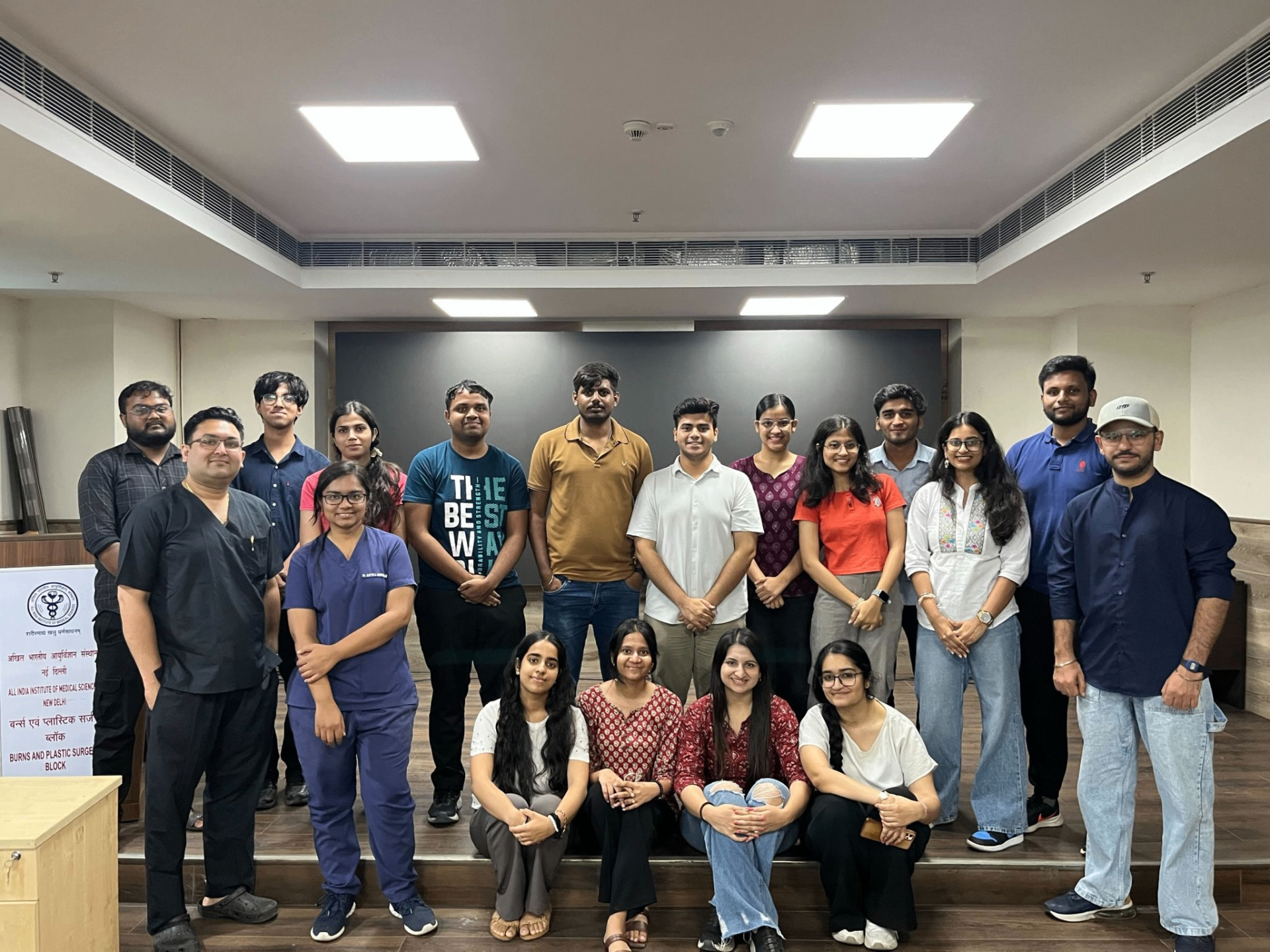
At the trauma door
Last week the Crashfree India team visited the JPN Apex Trauma Centre at AIIMS Delhi — India's only Level-1 trauma hospital of its kind. What we saw there was both inspiring, and a brutal wake-up call.
Inside the trauma centre, there is a strange, heavy calm. But just beneath it, the pace is relentless: 125–175 patients a day, over 70,000 a year. Most of them are road crash victims.
Two things that stood out immediately
- Pre-care coordinatorsAIIMS has just 2–3 staff managing emergency calls and prepping protocols before a patient arrives. Virtually absent in most Indian trauma centres.
- Colour-coded triageA simple visual system that distinguishes life-threatening injuries from stable but serious cases — vital during a surge of patients.
Here is the part that hurts: state hospitals across India rarely have either of these systems in place, even when facing similar trauma loads.
Unlikely heroes at the frontline
“The rickshawala who picked them up did everything we wished an ambulance had done. He had no training. He had no equipment. He just refused to look away.”
The majority of road crash victims at AIIMS are brought in by rickshawalas — not by police, not by ambulances. They are everyday heroes. Almost none of them have any first-aid training. India's emergency response system is, in some ways, dependent on goodwill and luck.
Countless lives could be saved if rickshawalas, auto drivers and delivery workers were trained in basic first aid and golden-hour protocols.
We don't just need ambulances, we need systems
There is no central command system for ambulances or pre-medical services available in India. The result is chaos — patients rerouted or delayed due to miscommunication. What is needed is not another number, but a full tech-enabled command structure.
- Unified commandOne number, one dispatch, one ambulance fleet per metro.
- GPS-linked ambulancesDispatch AI routes the nearest free unit to each call.
- Live trauma bed mapAmbulances routed by hospital capacity, not by habit.
- Trained bystandersFive-minute first-aid modules for every commercial driver.
The golden hour is real — but we're wasting it
Every second counts after a crash. Yet at every step, care is delayed:
- Untrained bystanders freeze or flee.
- Ambulances arrive late, or don't at all.
- Hospitals deny treatment without papers or money, despite the Right to Emergency Care being guaranteed under Indian law.
First-aid in schools, mass bystander training, awareness drives for Good Samaritan protections, and emergency kits in every public place — equipped with spine boards, splints and proper trauma gear — should be implemented as standard.
Final takeaways
Walking out of AIIMS, two emotions arose: pride, because we do have institutions pushing boundaries; and pain, because so many parts of India don't even have access to the basics.
I'm just one citizen. But I refuse to be silent. Because someday, someone I love could be in that trauma bay. And maybe, so could someone you love. Let's make sure we're ready when that day comes.
Treat the first hour like the most important hour
Because it is.
Share this story
Eye-opening insights from AIIMS Trauma on India's broken golden-hour response — and what to do about it.