
From ADAS to ARAS to a Safety Stack: Rethinking Two-Wheeler Safety in India
Two-wheeler riders accounted for roughly 45% of India's road fatalities in 2023. Importing 'car' ADAS is not enough — India needs a layered Two-Wheeler Safety Stack.
Why this conversation
India's road safety crisis is, first and foremost, a two-wheeler crisis. Nearly half of all road deaths in 2023 — roughly 57,282 fatalities — involved a two-wheeler. No imported framework will fit unless it starts from this fact.
Helmet non-use alone contributed to roughly 54,000 deathsin 2023. India is the world's largest two-wheeler market — so the majority of road users are not car drivers. The pressing question: can ADAS, designed inside the cabin of a car, meaningfully translate to two-wheelers, or does India need a distinct pathway?
The dialogue session
This piece grows out of a Crashfree India dialogue session — "Building Safer Two-Wheelers: Policy, Practice, and Progress"— moderated by Ms. Aastha, with two voices from opposite ends of the problem:
- Mr. Balraj BhanotFormer Director, ARAI; founding chairman, CMVR-TSC — on the regulatory arc from ABS to ARAS.
- Mr. Aayush KumarCOO & Co-founder, Bytes — on building India-specific rider-assist technology for cost-sensitive segments.
Mr. Bhanot traced the regulatory pivot: mandatory ABS for 125cc and above from 2019, and the extension to all two-wheelers from January 2026. But he was clear — regulation alone does not translate into outcomes. Helmet laws remain inconsistently enforced. Crash reports cite generic causes without behavioural or infrastructural depth. Without systematic post-crash investigation, policy ends up treating symptoms, not causes.
“Global ARAS is being built for global riders. India needs vision-based, threat-identification systems that are affordable enough to sit on a commuter two-wheeler — not just a flagship.”
What ADAS does — and doesn't
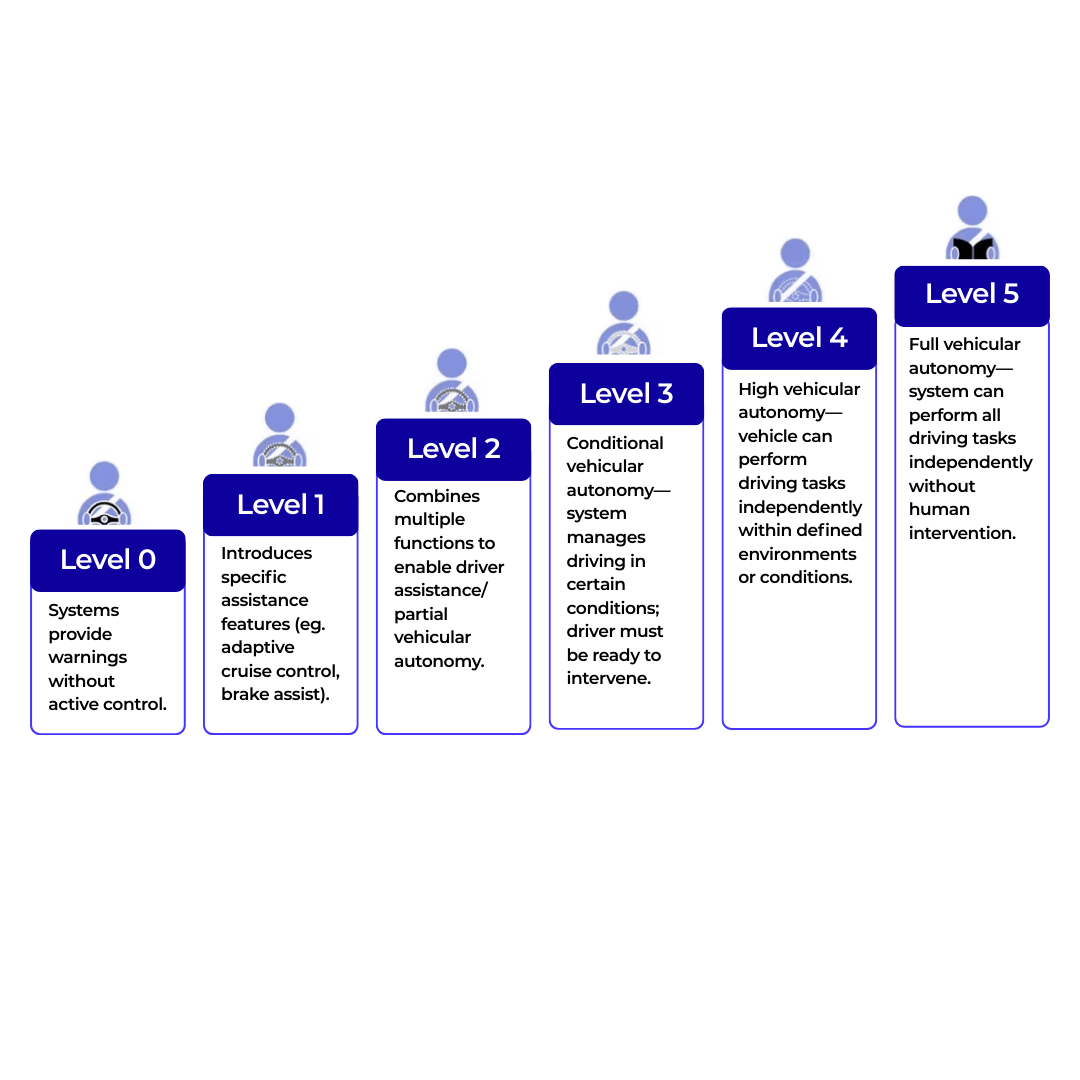
Advanced Driver Assistance Systems (ADAS) — lane-keeping, adaptive cruise, automatic emergency braking — were designed inside the cabin of a car. They assume seat belts, airbags, and a structural cage. Translated naively to two-wheelers, the metaphors break down.
A two-wheeler's dynamics — balance, lean angle, rider posture, manual control — cannot be addressed with automated steering correction or a rigid safety cage. French studies of 390+ real-world powered two-wheeler crashes suggest rider-assistance systems could affect the outcome in more than 60% of cases, and ABS alone is associated with a substantial drop in fatal crash risk. In the rest, technology has limited measurable effect — which is exactly why a one-feature answer is the wrong answer for India.
From ADAS to ARAS
ARAS prioritises situational awareness, early warning and limited stabilising intervention rather than automated control. Cameras, radars and inertial sensors generate environmental awareness; visual or haptic cues alert the rider; selective braking or torque modulation may assist during imminent loss of control — but the rider stays central.
- Blind-spot detectionRear and side radar alerts that warn riders of vehicles closing in.
- Forward collision warningCamera + radar fusion that flags imminent rear-end crashes.
- Adaptive cruiseMaintaining safe distance on highways — early production on premium bikes.
- Tyre pressure monitoringReal-time alerts to under-inflation, a leading cause of skids.
- Driver monitoringCameras that flag fatigue and distraction — critical for gig riders.
- Hazard detectionVision-based threat identification optimised for Indian mixed traffic.
The data problem
A recurring theme of the webinar was the inadequacy of Indian crash data. Traditional police reports capture limited causal detail. Without camera-based evidence or structured accident reconstruction, systemic contributors remain invisible. Technology therefore plays two roles: a preventive layer through rider assistance, and a data-generating layer that finally lets us understand crash causation. Real-world pilots with OEMs and last-mile delivery fleets are already generating behavioural insights no retrospective stat can capture.
Why we need a stack
“A great helmet on a great bike still loses to a pothole at dusk on an unlit corner. The stack is the answer, not any one layer.”
Gig workers and new risk
The gig economy creates a new exposure pattern. Delivery riders cover longer daily distances under time pressure, with income tied to delivery volume — and they sit in one of the most price-sensitive segments of vehicular technology. Driver monitoring, fatigue detection and targeted safety training are emerging answers, but they need policy engagement with platform companies and labour bodies in parallel.
What India should do next
The path forward is sequential and unglamorous: get ABS and DRL on every two-wheeler sold; enforce ISI helmet quality at the point of sale; build ARAS into the segments that can absorb its cost; and treat road and enforcement as full citizens of the safety stack.
Two-wheeler safety in India is not a technology problem alone. It is a systems design challenge — regulation, innovation, enforcement, economics and behaviour, all aligned. The previous decade focused on mandating foundational standards. The next decade must focus on integration.
Build the stack, not just the gadget
ARAS is necessary. It is not sufficient.
- Mandate ABS, daytime running lights and high-quality helmets across all segments
- Pilot rider-assist features (blind-spot, collision warning) on commuter two-wheelers
- Treat road geometry and enforcement as Tier-1 inputs to two-wheeler safety
Share this story
Why India's two-wheeler safety challenge needs more than imported ADAS — it needs a full stack.