
Fixing a High-Risk Junction with Project Rakshak at Taramani IIT Gate, Chennai
Team Sentinels walked the IIT-Taramani approach, surfaced overlooked design gaps and proposed low-cost interventions any city engineer can deploy this quarter.
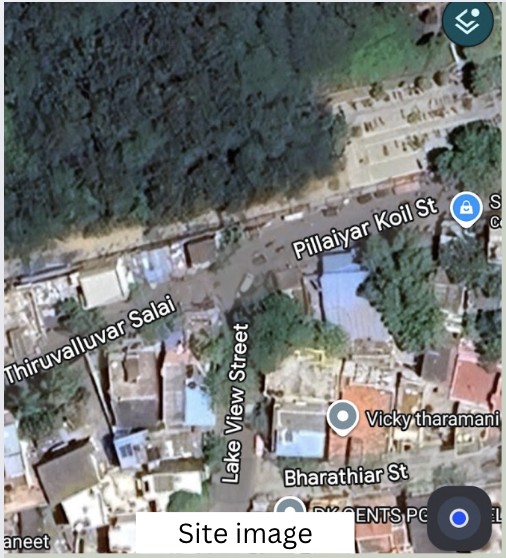
The site
The IIT Madras gate at Taramani sits on a corridor that moves campus traffic, BPO commuter flows and arterial through-traffic in the same window. Team Sentinels, a student squad under Project Rakshak, spent two weeks walking and timing the junction.
It is a three-road T-junction on a heavily used urban corridor, with a steady mix of pedestrians, two- and three-wheelers, autos, cars and mini-trucks all day. Risk peaks consistently between 8–10 AM and 5–8 PM. A temple abutting the junction tightens the space further, drawing pedestrian spillover and sudden congestion during festivals. Chennai recorded 5,034 road crashes in 2021 and 3,452 in 2022, ranking among the most affected million-plus cities — and most of that danger lives outside the headline blackspots, in junctions just like this one.
What the audit found
Across pedestrians, riders, drivers and shopkeepers, there was striking consistency in how the junction was described. Navigating it was rated Very Difficult, and collision risk Very High. At the centre of the problem sits a blind left turn near the temple, where sight distance is critically restricted — road users have almost no visibility of oncoming traffic until the final moment, turning routine movements into near-miss situations.
- No pedestrian phaseThe signal cycle has no dedicated walk interval for students crossing the gate.
- Faded markingsStop lines and lane markings have worn off; drivers improvise lane discipline.
- Absent advance signageNo school/campus zone warning ahead of the junction.
- Encroached footpathVendors and parked autos push pedestrians into the carriageway.
- Blind temple turnZero sight distance at the left turn near the temple — pure guesswork.
- No junction controlNo signals, no signage, no priority — movement runs on informal negotiation.
Why speed is hard to judge
Speed management at Taramani IIT Gate is not just inadequate — it is actively unsafe. The existing speed breaker is uneven, non-compliant with IRC standards, and forces abrupt braking and sudden swerves. The road surface compounds the danger: potholes and uneven patches demand last-second manoeuvres, sharply raising the chance of skids and falls in the rain. At night, poor or non-functional street lighting multiplies the risk further.
“It is a suspension-breaker, not a speed breaker. If you brake suddenly, the guy behind might hit you.”
What stakeholders agreed on — without disagreement
Different users experience the junction differently, but their concerns converged on the same core failures:
“Very unsafe. I hold my child's hand very tightly. The whole area gets blocked. Even an ambulance cannot pass.”
Proposed interventions
Based on a road safety audit aligned with IRC SP:88and stakeholder inputs, Team Sentinels proposed a low-cost, high-impact framework focused on immediate risk reduction — no waiting for signalisation or grand redesigns:
- Pedestrian phaseInsert an all-red 15s phase aligned with class and shift changeovers.
- Repaint and rumbleRepaint stop lines and add rumble strips on the IIT approach.
- Advance signageYellow campus-zone boards 100m before the junction in both directions.
- Footpath reclamationBollards and clear hawker zoning to restore the walking lane.
- Convex mirrorA 90–100 cm convex mirror at the blind turn to restore sight distance.
- Table-top breakerReplace the broken speed breaker with an IRC-compliant flat-topped speed table doubling as a raised crossing.
- Surface repairPothole filling and resurfacing of approach roads.
Voices from the corridor
“I cross this gate four times a day. Most days a two-wheeler brushes past me. It is not a question of if, it is a question of when.”
“It is a guess. You can't see anything. No signals, no rules. Survival of the fittest. The blind turn is pure risk.”
What happens next
The Team Sentinels report has been submitted to Chennai Traffic Police and GCC engineering. Project Rakshak will return in six months to audit what was implemented — and publish the scorecard.
Safer streets are not created by waiting for crashes to demand attention. They are created by recognising risk early — and acting before guesswork turns into harm.
Adopt a junction near you
Project Rakshak is open to college teams across India. Pick a black spot. Walk it. Document it. Fix it.
Share this story
A youth-led road safety audit and intervention plan for a high-risk Chennai junction.