
Project Rakshak Ignites Change: A Case Study of Kamta Chauraha, Lucknow
From Lucknow's blackspots to highways nationwide, Project Rakshak proves safer roads aren't rocket science — they're strong will plus solid evidence.
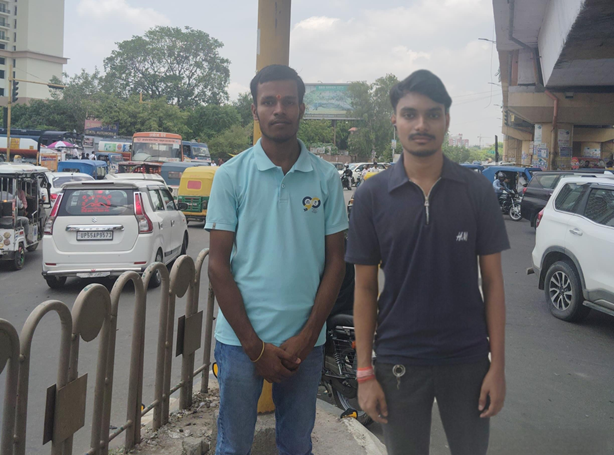
Why Kamta Chauraha
Kamta Chauraha is one of Lucknow's persistent blackspots — flagged by residents, mentioned in news reports, and still un-treated for years. The Rakshak team chose it precisely because it was 'known' but unaddressed.
India owns barely 1% of the world's vehicles, yet accounts for 11% of global crash deaths (World Bank, 2020). These are not statistics; they are lives lost to gaps that policies alone cannot bridge. PathRakshak — led by Vineet Kumar and Prince Sharma — parked itself in the middle of Lucknow's messiest blackspot: the intersection of Shaheed Path and Faizabad Road, which the PWD itself lists among the city's top 11 danger zones.
What the audit showed
- Speed mismatchApproach speeds far exceeded what the geometry could absorb.
- Missing refugePedestrians had no central island to break the crossing.
- Signal failureExisting controller spent long minutes dark every day.
- Auto-rickshaw chaosAutos and e-rickshaws paused mid-road to pick up passengers, blocking lanes.
- No zebra crossingsChildren, vendors and pedestrians wove through moving traffic with zero refuge.
- Lane confusionMerging traffic from Shaheed Path and Faizabad Road had no lane discipline or signage.
The team did not stop at observation. Over three months, PathRakshak shot photos and videos, interviewed shopkeepers, auto drivers and traffic constables on duty, and pieced together the real picture behind the chaos — the kind of documentation that PWD and Lucknow Traffic Police could act on without commissioning a fresh study.
What got delivered
“For the first time in years, I do not flinch when my mother crosses this junction.”
Repainted markings, a functional pedestrian refuge, and a serviced signal cycle. Modest, ordinary fixes — delivered because someone wrote them down properly.
The lesson
Most Indian blackspots are not awaiting innovation. They are awaiting a credible, well-documented case file. Rakshak's job is to write those files — relentlessly, junction by junction.
Project Rakshak is India's first large-scale, youth-led road safety initiative — 39 teams across the country, working with FIRs, RTIs and ground audits, partnering directly with Traffic Police and PWD. Kamta Chauraha is one node in that network. The full Phase 1 report documents the rest.
How you can help
Safer roads do not need grand plans — they start outside your doorstep. Photograph the broken signal, the missing zebra, the encroached footpath near your home or office. Share it. Tag the authority. Every report adds to the evidence base that finally moves a file.
Evidence is the unlock
Local authorities respond when a problem is documented in their language.
Share this story
A youth-led blackspot intervention that turned anecdote into implemented change.